7 Mistakes You’r making
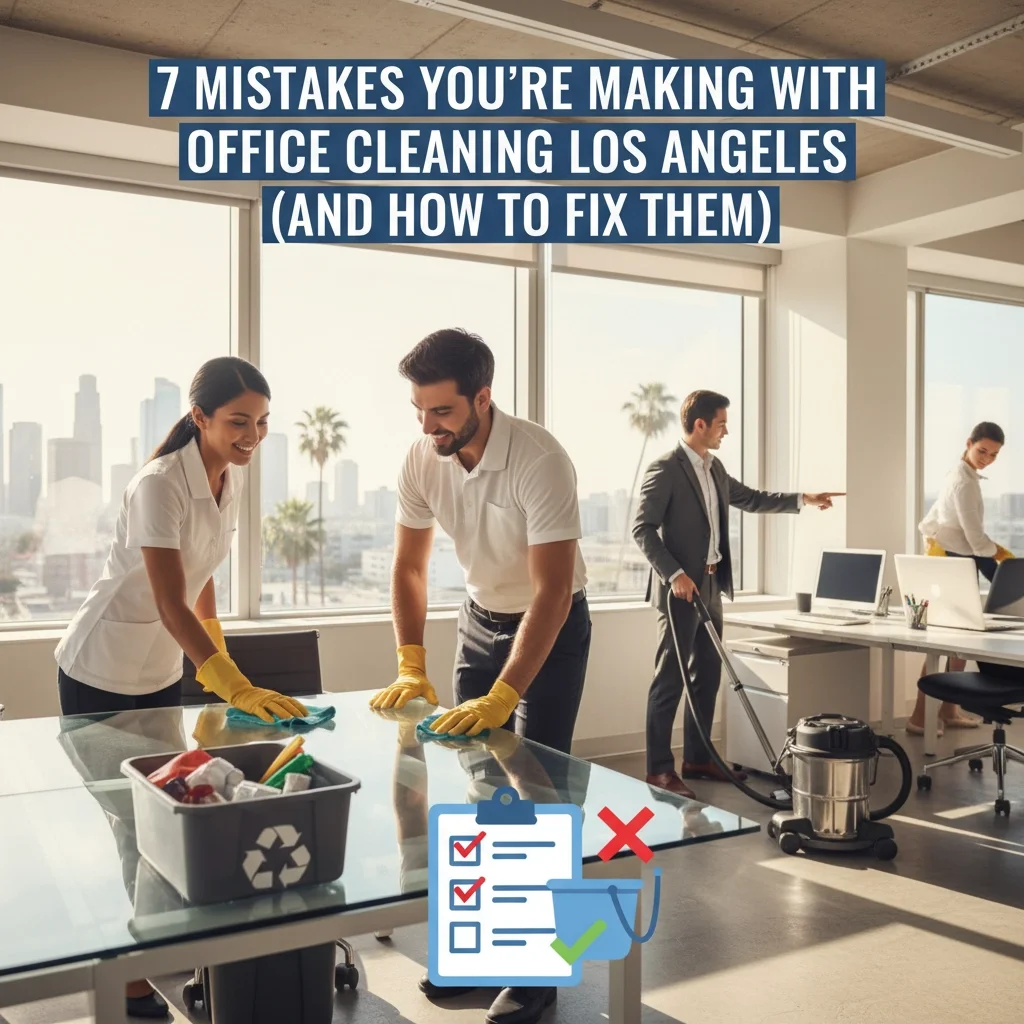
Your Los Angeles office represents your business to clients, employees, and partners every single day. Yet despite the best intentions, many LA businesses are unknowingly making critical cleaning mistakes that compromise their professional image, employee health, and bottom line.
Whether you're managing a downtown high-rise, a Santa Monica startup, or a Burbank production facility, these seven common office cleaning errors could be costing your business thousands in damage, lost productivity, and missed opportunities. The good news? Every single one is completely fixable with the right approach.
Mistake #1: Using the Wrong Cleaning Products for Your Surfaces
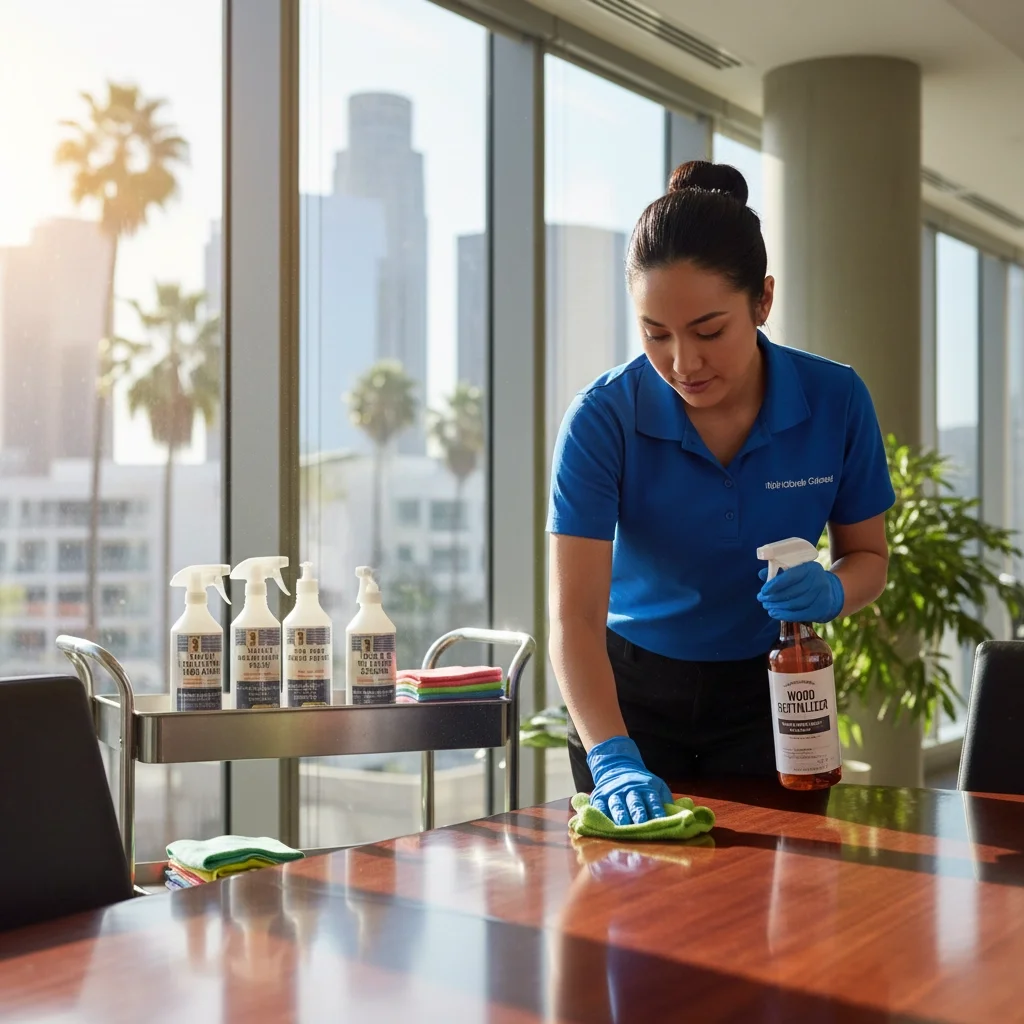
Walk through most LA offices and you'll find the same scenario: one "all-purpose" cleaner being used on everything from marble lobby floors to mahogany conference tables to stainless steel elevator panels. This approach seems efficient, but it's actually destroying your office one surface at a time.
Using acidic cleaners on natural stone surfaces will permanently dull and discolor them. All-purpose cleaners leave wood furniture looking cloudy and stripped of their protective finish. Meanwhile, using heavy-duty degreasers on surfaces that don't need them creates a residue that actually attracts more dirt and grime.
The Fix: Match your cleaning products to your specific surfaces. Natural stone requires pH-neutral cleaners. Wood furniture needs specialized wood cleaners that nourish rather than strip. Stainless steel demands streak-free formulations. When in doubt, test any new product on a small, hidden area first. Professional cleaning services like LAMS bring surface-specific expertise and products that protect your investment.It all begins with an idea. Maybe you want to launch a business. Maybe you want to turn a hobby into something more. Or maybe you have a creative project to share with the world. Whatever it is, the way you tell your story online can make all the difference.
Don’t worry about sounding professional. Sound like you. There are over 1.5 billion websites out there, but your story is what’s going to separate this one from the rest. If you read the words back and don’t hear your own voice in your head, that’s a good sign you still have more work to do.
Be clear, be confident and don’t overthink it. The beauty of your story is that it’s going to continue to evolve and your site can evolve with it. Your goal should be to make it feel right for right now. Later will take care of itself. It always does.
Mistake #2: Completely Ignoring High-Touch Surfaces
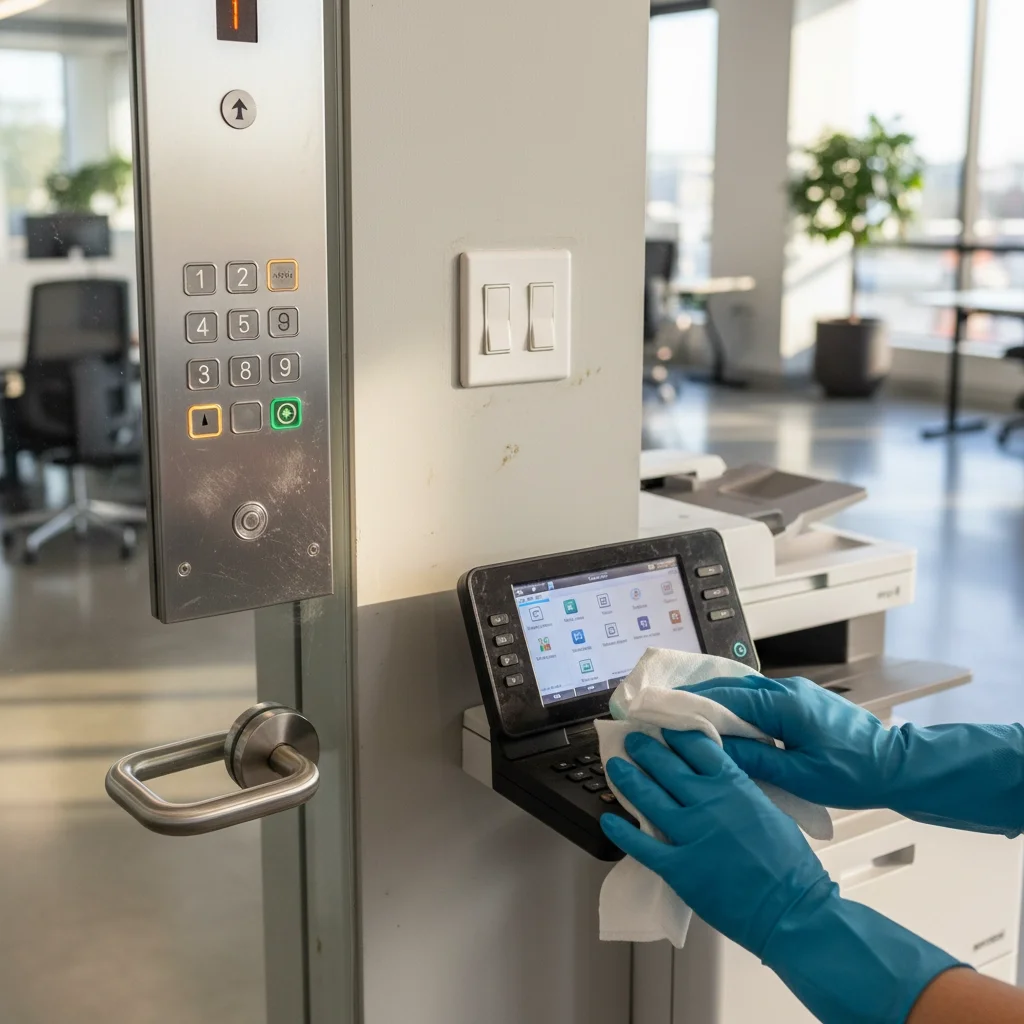
Door handles, light switches, elevator buttons, shared keyboards, phone handsets, copier controls, and break room appliances get touched by dozens of people every day. Yet many cleaning routines skip right over these germ hotspots, focusing instead on visually obvious areas like floors and desks.
This oversight is particularly problematic in LA's dense office buildings where employees, clients, and vendors constantly move between floors and companies. Those elevator buttons and shared door handles become breeding grounds for bacteria and viruses that spread throughout your workspace.
The Fix: Create a dedicated high-touch surface protocol. These areas need disinfection multiple times throughout the day, not just during evening cleaning. Keep disinfectant wipes at reception desks, break rooms, and copy areas for immediate spot cleaning. Train your team to identify and prioritize these critical contact points during every cleaning cycle.
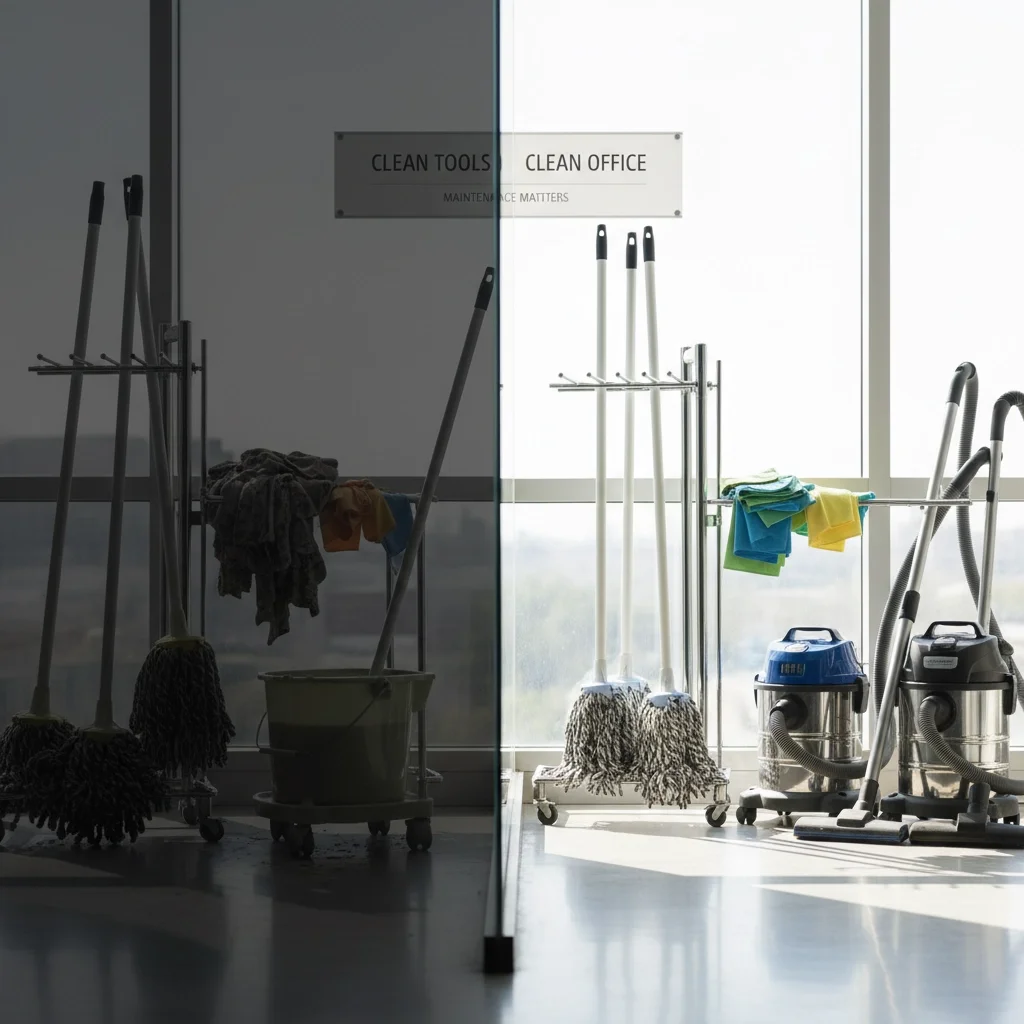
Mistake #3: Using Dirty Cleaning Tools and Equipment
This might sound obvious, but you'd be surprised how often LA offices try to clean with dirty mops, grimy cloths, and full vacuum bags. A mop that was last used in the bathroom and then applied to lobby floors isn't cleaning: it's spreading contamination. Similarly, trying to clean with a vacuum that's beyond capacity simply pushes dirt around rather than removing it.
Dirty cleaning tools don't just fail to clean effectively; they actively make spaces dirtier by redistributing bacteria, allergens, and debris throughout your office environment.
The Fix: Establish tool maintenance as part of your cleaning protocol. Mop heads should be thoroughly cleaned or replaced after bathroom use. Cleaning cloths need regular washing with proper sanitizing agents. Vacuum bags should be changed when three-quarters full, and equipment should be inspected regularly for wear. Professional services maintain multiple sets of tools specifically to avoid cross-contamination between different areas and surfaces.
Mistake #4: Operating Without a Formal Cleaning Schedule
Many LA businesses operate on a "clean when it looks dirty" approach. The problem is that by the time dirt and grime become visually obvious, they've already built up significantly, making removal much more difficult, time-consuming, and expensive.
This reactive approach also means high-traffic areas get inconsistent attention. Your lobby might get cleaned when an important client visit approaches, but what about the employee break rooms, conference rooms, or less visible areas that still impact daily operations?
The Fix: Implement a formal, documented cleaning schedule that addresses both high-traffic areas and regular maintenance tasks. Different areas need different frequencies: restrooms require daily attention, while storage areas might need weekly deep cleaning. Consistency makes cleaning easier because buildup stays manageable. Consider partnering with a commercial cleaning service that brings systematic scheduling expertise to ensure nothing gets overlooked.
Mistake #5: Overlooking Hidden Areas and Hard-to-Reach Spots
Out of sight, out of mind: but unfortunately, not out of your office environment. Tops of cabinets, undersides of desks, areas behind equipment, and spaces above ceiling tiles become breeding grounds for dust mites, mold spores, and allergens that eventually circulate throughout your workspace.
These hidden areas are particularly problematic in LA's climate, where dust accumulation happens quickly and allergens can trigger respiratory issues for sensitive employees. What starts as invisible buildup eventually affects air quality and employee comfort.
The Fix: Include comprehensive coverage of nooks, crannies, and hard-to-reach areas in your regular cleaning checklist. Schedule quarterly deep cleaning sessions that specifically target these hidden spots. Consider the specialized equipment and techniques that professional cleaning teams use to access and properly clean areas that standard office cleaning typically misses.
Mistake #6: Inadequate Training for Cleaning Staff
Whether you're using in-house employees or contracted staff, inadequate training leads to ineffective cleaning, damaged surfaces, and safety hazards. Employees who don't understand proper cleaning techniques, product usage, or safety protocols can inadvertently cause expensive damage while thinking they're being helpful.
This problem is especially common when regular office employees are asked to handle cleaning duties without proper guidance. Good intentions combined with wrong techniques often create bigger problems than they solve.
The Fix: Invest in comprehensive cleaning training that covers proper techniques, product selection, safety protocols, and equipment usage. Provide written guidelines and regular refresher sessions. If you're managing this internally, consider having a professional cleaning company conduct initial training sessions to establish proper foundations. Many businesses find that partnering with experienced cleaning professionals eliminates training challenges entirely while ensuring consistent, quality results.
Mistake #7: Ignoring Carpet Stains and Spills
LA office carpets endure constant foot traffic, coffee spills, food drops, and general wear from daily business operations. The biggest mistake is treating carpet stains as "tomorrow's problem": because by tomorrow, many stains have set permanently.
Quick action makes the difference between a minor cleanup and expensive carpet replacement. Yet many offices lack immediate spill response protocols, allowing stains to penetrate deeply into carpet fibers where they become nearly impossible to remove.
The Fix: Implement immediate spill response procedures. Keep appropriate carpet cleaning supplies readily available and train staff on proper blotting techniques (never rub or scrub). Address stains within minutes, not hours or days. Schedule regular professional carpet cleaning every 3-6 months to remove embedded dirt and allergens before they cause permanent damage. Professional cleaning services can also apply protective treatments that make future stain removal easier.
Why These Mistakes Matter More in Los Angeles
LA's unique environment amplifies these common cleaning mistakes. High air pollution means indoor air quality becomes even more critical. Dense urban buildings create rapid wear on surfaces and higher contamination risks. The city's business culture demands professional appearances, making cleaning mistakes more visible and costly.
Additionally, LA's diverse business landscape: from entertainment companies to tech startups to traditional offices: means cleaning approaches need to be more sophisticated and tailored than generic solutions.
Moving Beyond Common Mistakes
Avoiding these seven mistakes requires either significant investment in training, equipment, and systems, or partnership with experienced professionals who bring expertise, proper tools, and proven protocols to your business.
The choice isn't just about cleaning: it's about protecting your investment, maintaining professional standards, and creating an environment where your business can thrive. When cleaning is done right, it becomes invisible. When it's done wrong, it becomes expensive.
Ready to eliminate these costly mistakes from your LA office? Contact LAMS to learn how professional commercial cleaning services can protect your business, improve your environment, and give you peace of mind that your office represents your company the way it should.